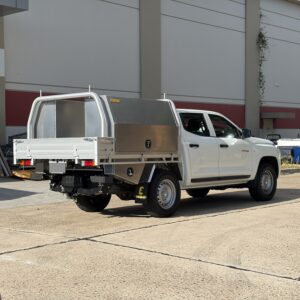
A builder’s workday depends on staying organised, working efficiently and being ready for site demands. Materials change from job to job, tools vary between tasks and deadlines rarely slow down. When your ute is set up correctly, you spend less time searching for equipment and more time getting the job done.
Small improvements in organisation can save hours each week across busy job sites. In this guide, we explore the essential components of a professional builder’s ute setup, compare different layout styles, highlight common planning mistakes and offer practical ideas to help you create a system that keeps you efficient on site.
Understanding what a builder’s ute setup needs to achieve
Before choosing canopies, drawers or toolboxes, it helps to understand what your setup must deliver. Most builders rely on their ute for several core functions, including:
Storage for daily tools
Builders carry a wide range of tools each day, from hand tools to power equipment. Your ute needs space for both large items such as saws and nail guns, as well as smaller pieces like bits, blades, pencils and fasteners. A good system protects tools from damage and keeps them easy to access.
Capacity for variable loads
Some days you are carrying bags of cement, other days it is lengths of timber, sheets of ply or heavy hardware. A builder’s ute setup must adapt to different loads without slowing you down.
Site efficiency
Time wasted searching for tools adds up quickly. A properly organised ute reduces walking back and forth, keeps equipment in predictable zones and helps you work faster with less downtime.
Working more efficiently also improves safety, since tools are less likely to be misplaced, trip hazards are reduced and heavy equipment becomes easier to manage on busy sites.
Choosing the right canopy style for builders
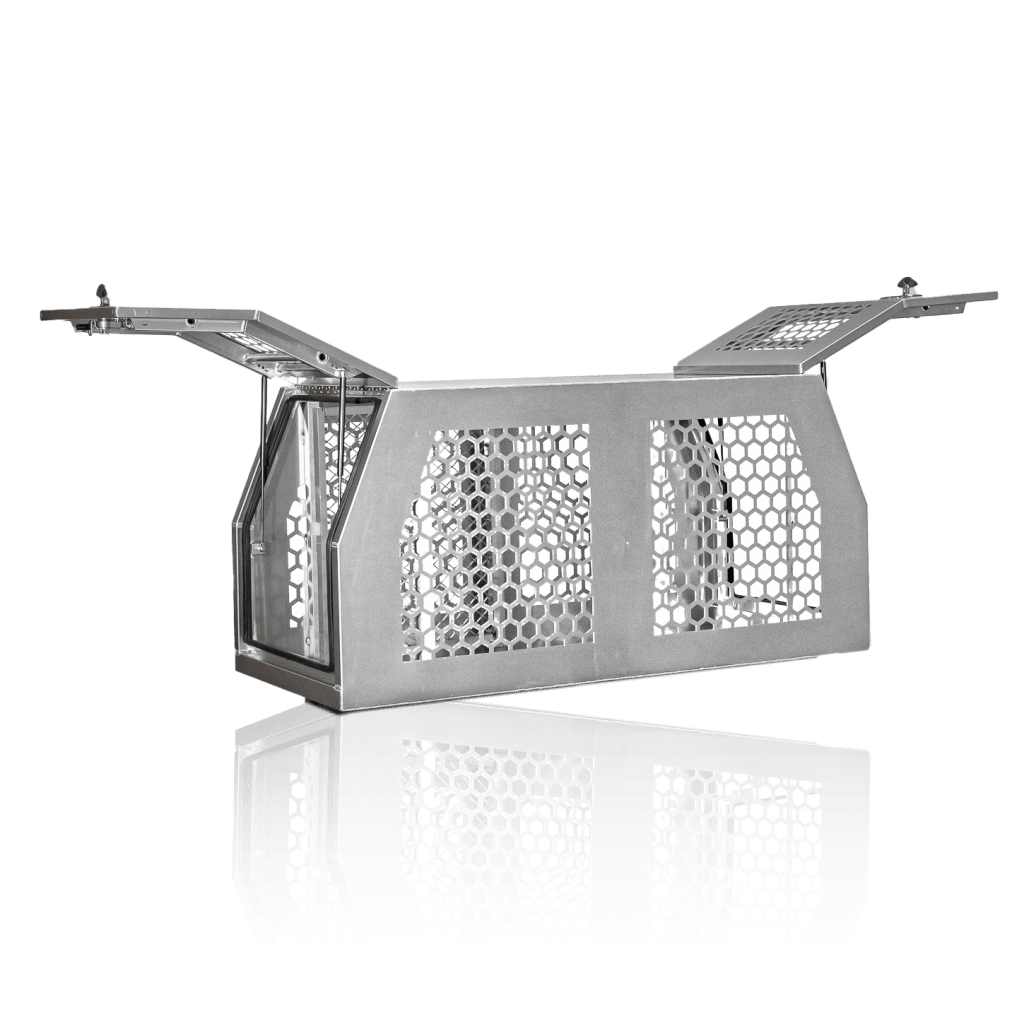
A canopy provides the secure, weather-resistant storage most builders need. These two main canopy models suit worksite use, each offering different benefits depending on your priorities:
Canopy X1 Series
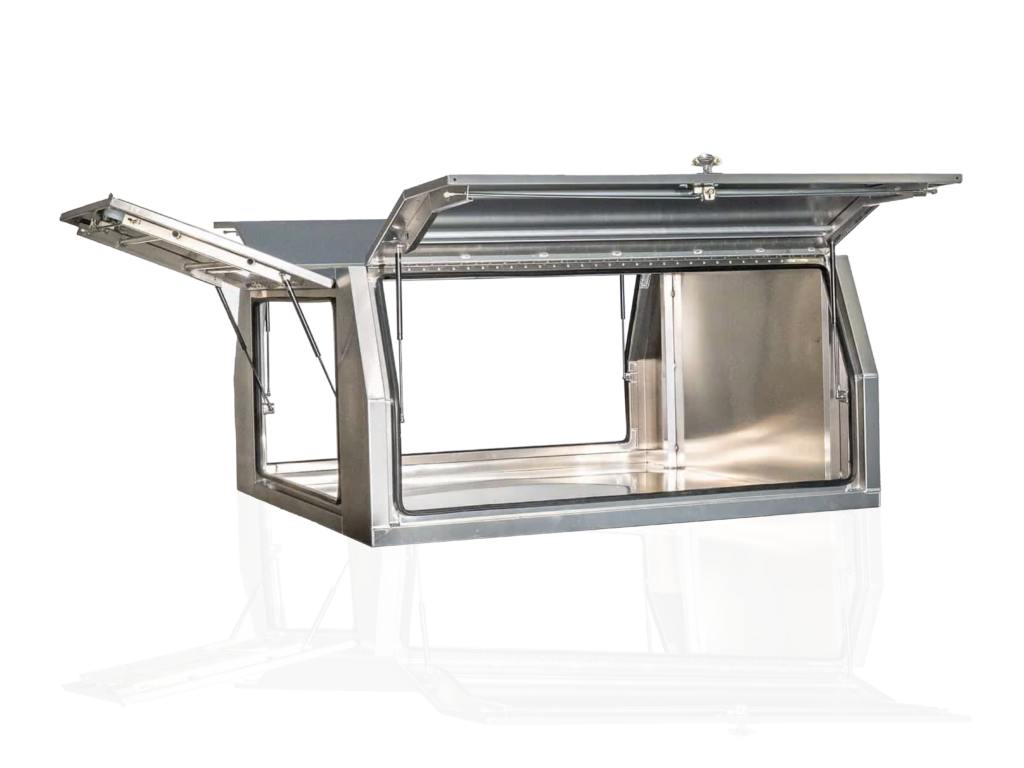
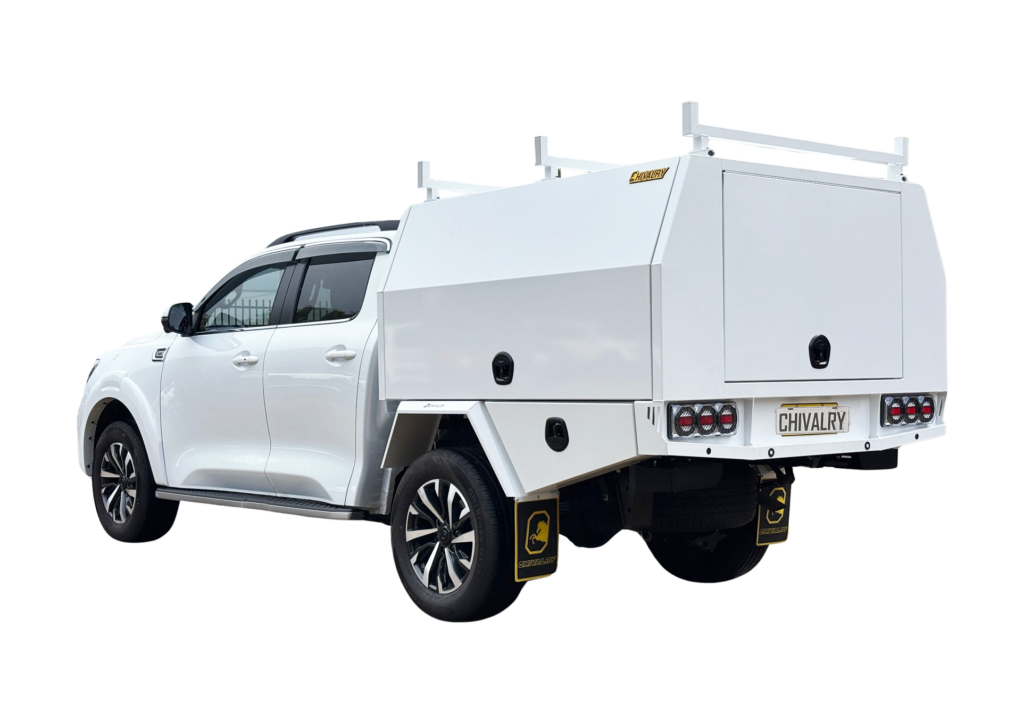
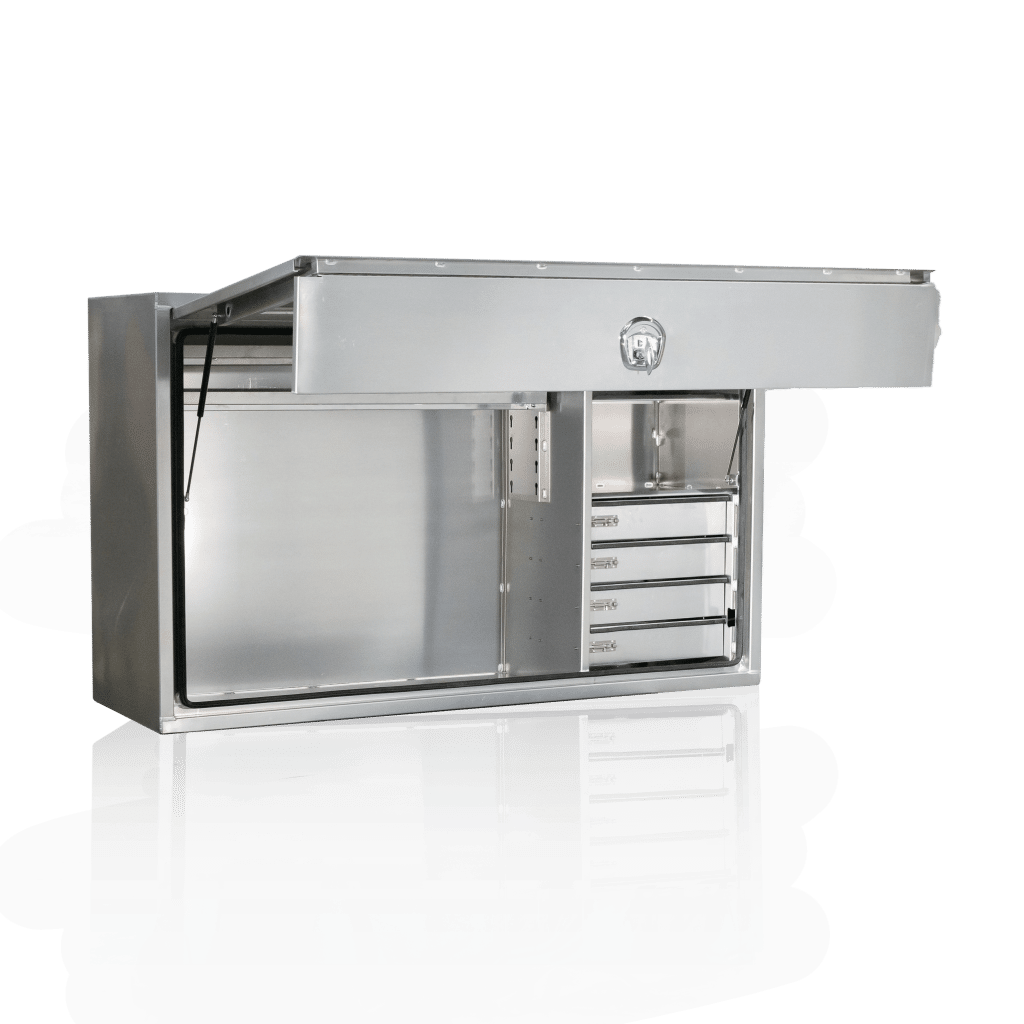
A reliable option for builders who want strong construction without unnecessary extras. The Canopy X1 provides solid dust and weather protection and offers plenty of room for toolboxes, shelves and canopy drawer slide systems. It suits builders who want a practical base that can be upgraded in stages.
Canopy X3 Series
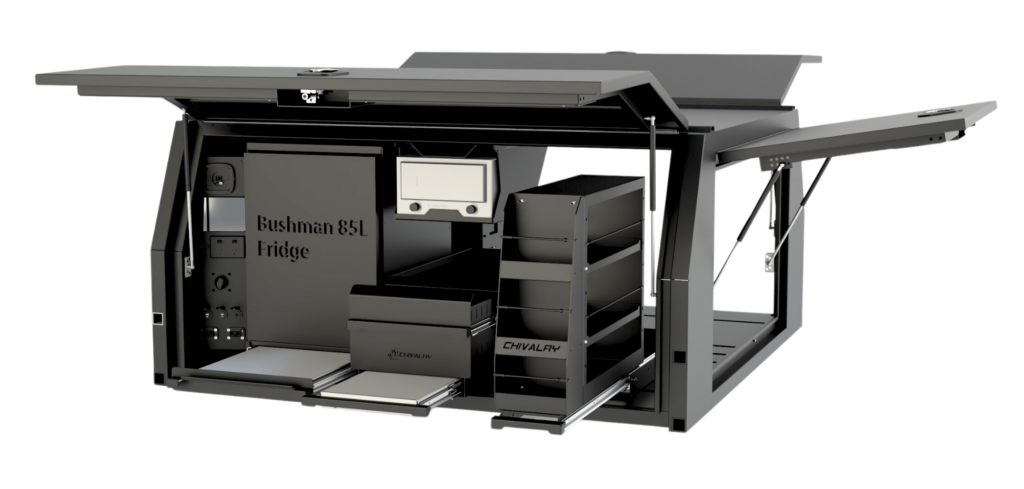
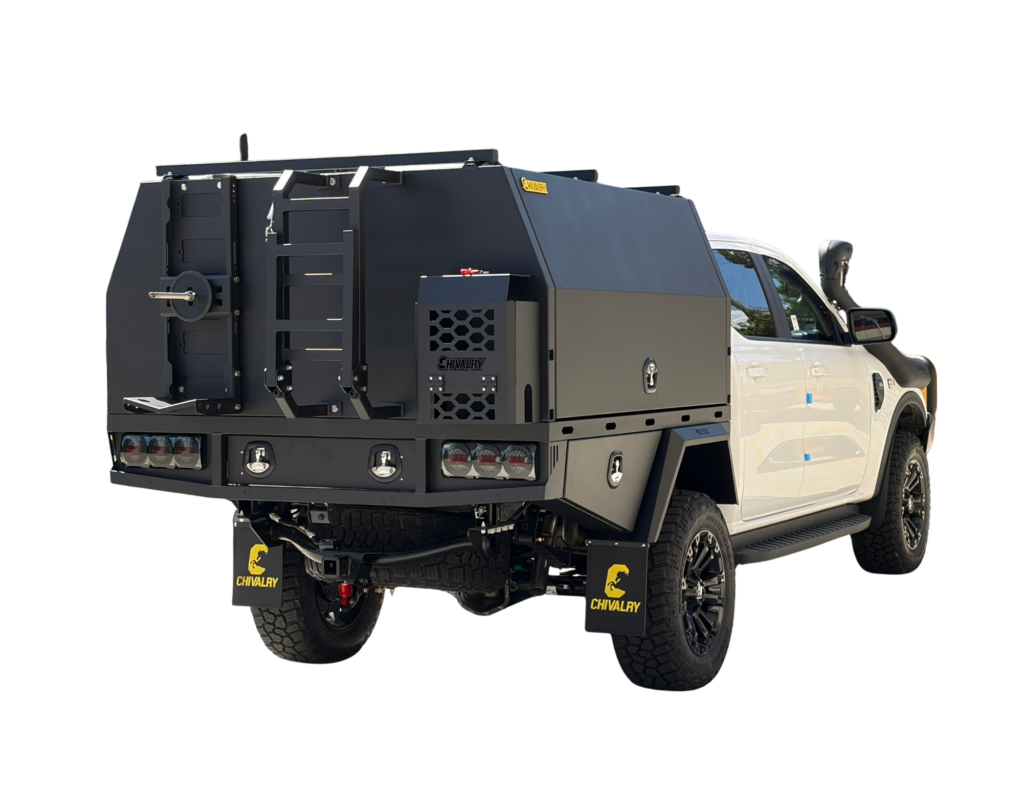
A more advanced choice for builders who want a long-term, high-capacity storage system. The modular internal framework allows shelving, drawers and heavy tool storage to be mounted securely. If your work requires large tools, organised sections and future upgrades, the Canopy X3 offers flexibility that suits complex setups.
Both canopy types deliver strong protection, but the right choice depends on how much structure and internal mounting support you need.
Selecting toolboxes and internal storage
Toolboxes are essential in any builder’s ute setup because they keep valuable equipment secure and organised. For example, a carpenter might keep all fix-out tools grouped together in one drawer, while a builder who works across multiple sites can dedicate a section to fast-access tools needed for framing, formwork or general repairs.
Choosing the right combination depends on how you work. Below are the most common options used by builders:
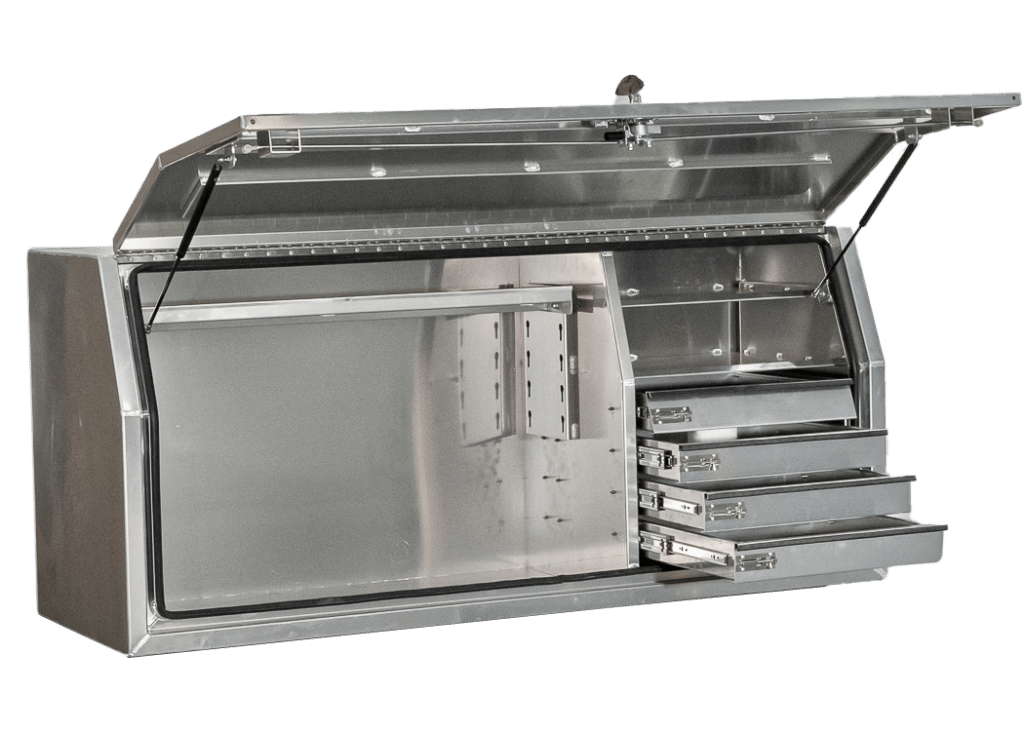
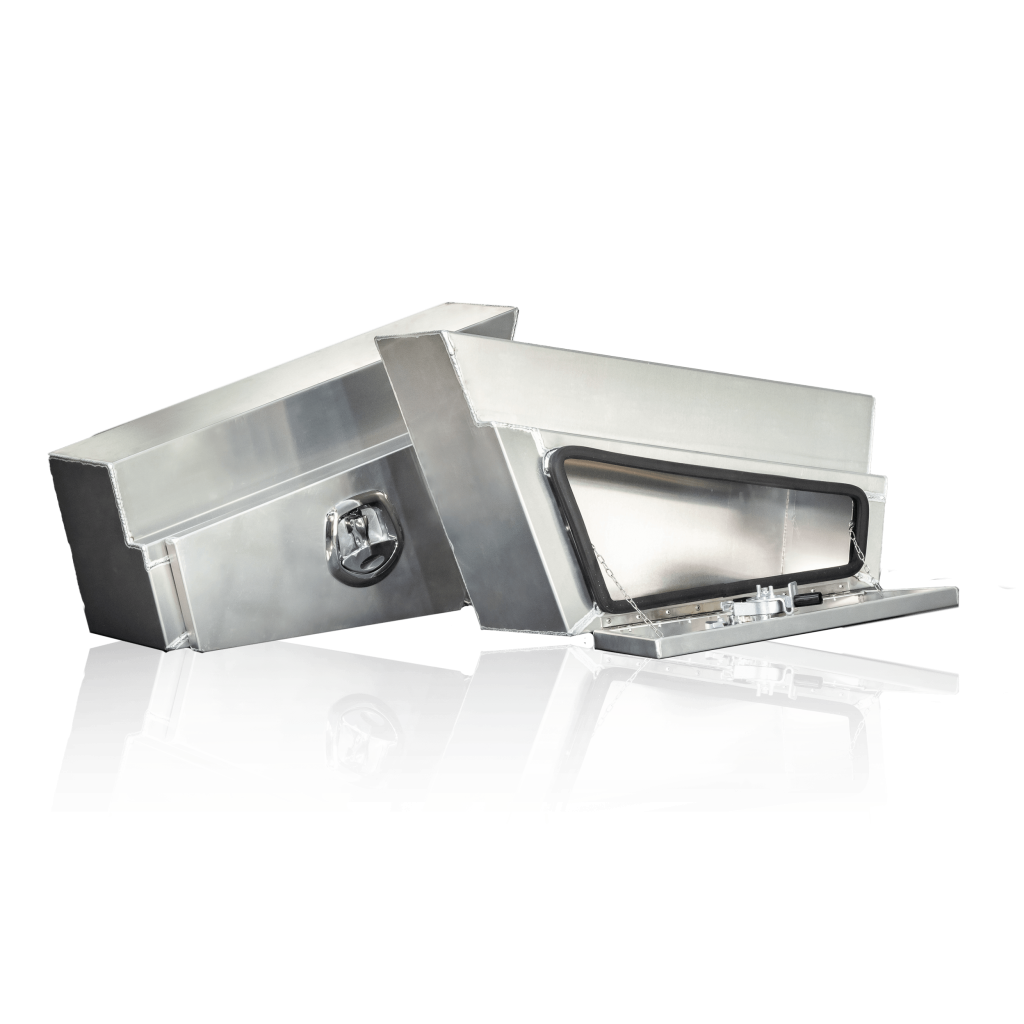
- Under-tray toolboxes — Useful for storing heavier or dirtier tools such as crowbars, shovels, angle grinders or extension leads. They free up canopy space for more delicate equipment.
- Side-opening toolboxes — Ideal for frequently used power tools. The side access makes it quick to grab drills, drivers or saws without climbing onto the tray.
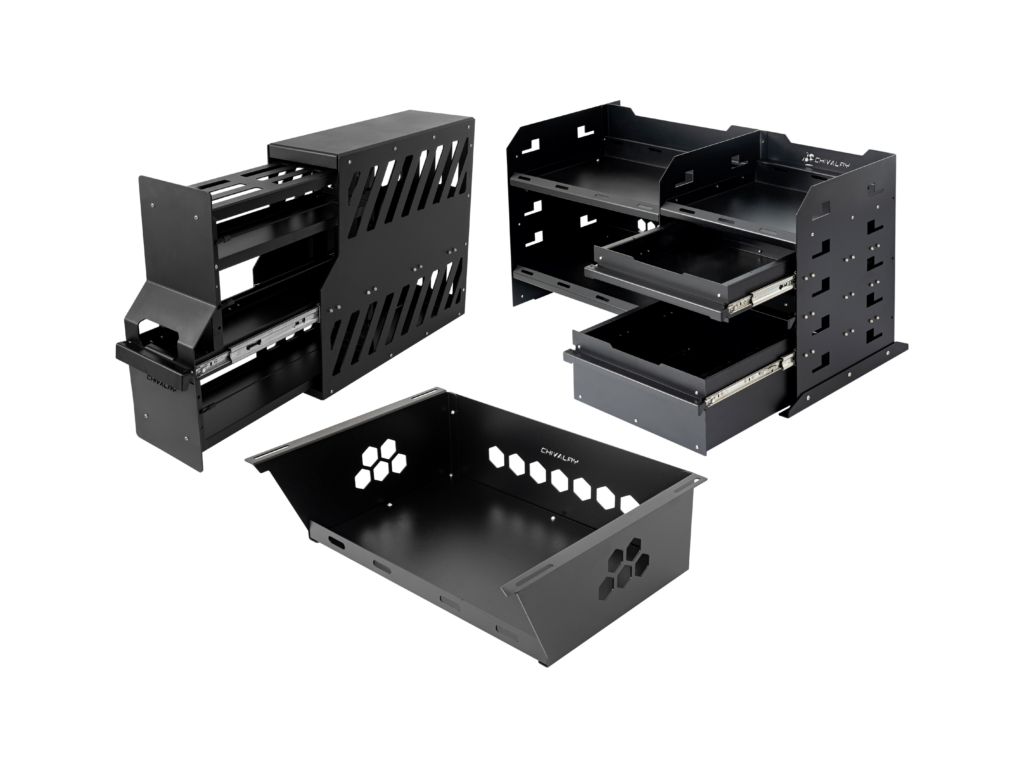
- Canopy drawers — A canopy drawer slide system helps separate small parts, fixings, blades and measuring tools. It keeps everything visible, so you spend less time searching for small items inside larger bags.
- Modular layout — Dividers, removable tubs and labelled compartments help builders stay organised during busy days. Group tools by trade tasks such as framing, carpentry, concreting or fix out to reduce clutter and increase efficiency.
Choosing the right tray foundation
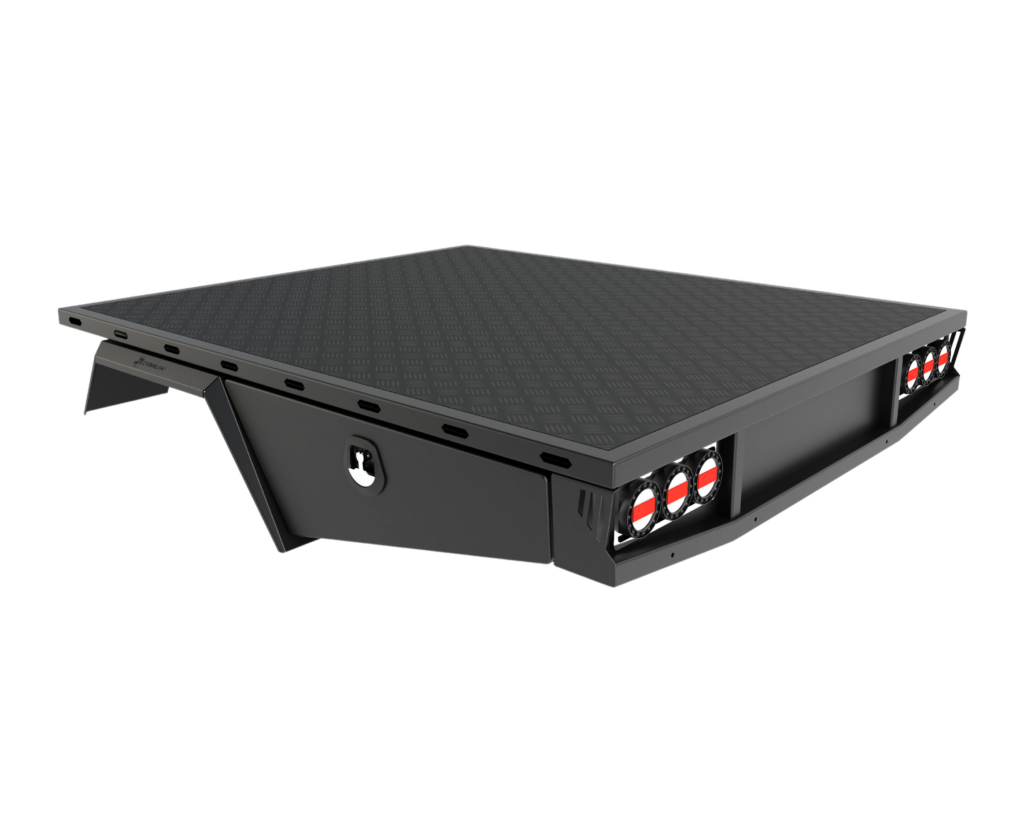
The tray forms the base of your entire ute build and needs to support both heavy loads and organised storage. Builders frequently load long and bulky materials such as framing timber, sheeting and conduit, so a stable tray helps prevent flex and provides secure tie-down points for transporting awkward or oversized items.
These are the key tray features for builders:
- Strong aluminium construction that balances toughness and weight
- Integrated tie-down points for securing long or awkward materials
- Under-tray toolboxes for storing heavier items
- Non-slip flooring for better safety
- Compatibility with different canopy styles
Comparing mixed-use and dedicated builder setups
Not all builders use their ute in the same way. Some need the ute for both work and personal use, while others dedicate the vehicle entirely to the job.
Mixed-use setups
A mixed-use builder’s ute setup works for those who need flexibility. These builds rely on:
- Removable storage tubs
- Basic drawer systems for everyday tools
- A canopy layout that still leaves space for personal gear
- Easy-to-clean floors for weekend use
This style suits builders who may use the ute for family trips, light towing or recreational weekends.
Dedicated worksite setups
A fully dedicated work setup focuses on efficiency and durability. These often include:
- Permanent shelving and drawer systems
- Water-resistant storage for plans or electronics
- Secure sections for expensive tools
- Dedicated zones for safety gear or site materials
- Fixed mounting for power systems and lighting
Dedicated setups save time on busy worksites and offer the most organised layouts for professional builders. A builder working large commercial jobs may benefit from this structure, since they often carry laser levels, larger power tools and site documentation that need secure, weatherproof storage.
Common pitfalls in builder ute setups
Avoiding these mistakes early helps build a reliable setup that lasts:
- Insufficient weight planning — Heavy tools, materials and water add up quickly. Overloading affects handling, braking and tyre wear. Keep heavier items low and close to the centre of the vehicle.
- Disorganised storage — Large open spaces lead to clutter. Use drawers, dividers and labelled zones to stop gear shifting around.
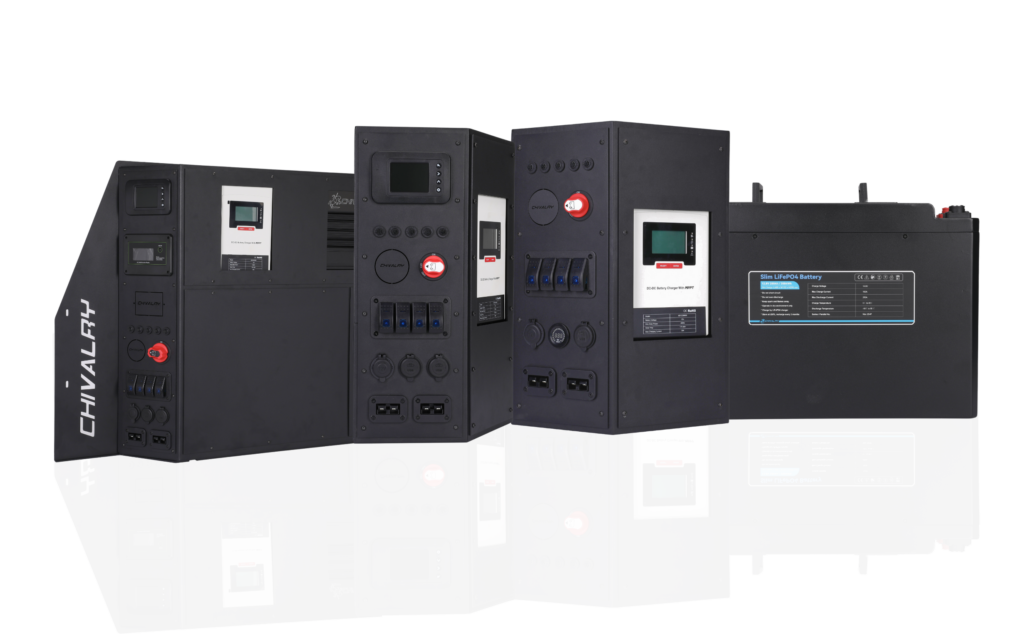
- Poor power planning — Many builders use battery chargers, lights, radios and measuring equipment. A power station or dedicated electrical system prevents flat batteries and keeps tools ready to use.
Practical ideas to improve a builder’s ute setup
These ideas can help you improve efficiency on site:
- Heavy tool zone — Store saws, grinders and nail guns in lower drawer systems to protect them and keep weight down.
- Fast access compartment — Keep commonly used tools near the canopy doors or in side-opening toolboxes.
- Material-friendly tray layout — Ensure tie-down points are easy to reach so you can secure sheet goods quickly.
- Powered workstation — Pair a power station with canopy lighting to create a mobile charging hub for drills, lasers and batteries.
- Split organisation — Divide your canopy into dedicated zones for hand tools, power tools, consumables and safety gear.
Bringing your builder’s ute setup to life with L&G Chivalry
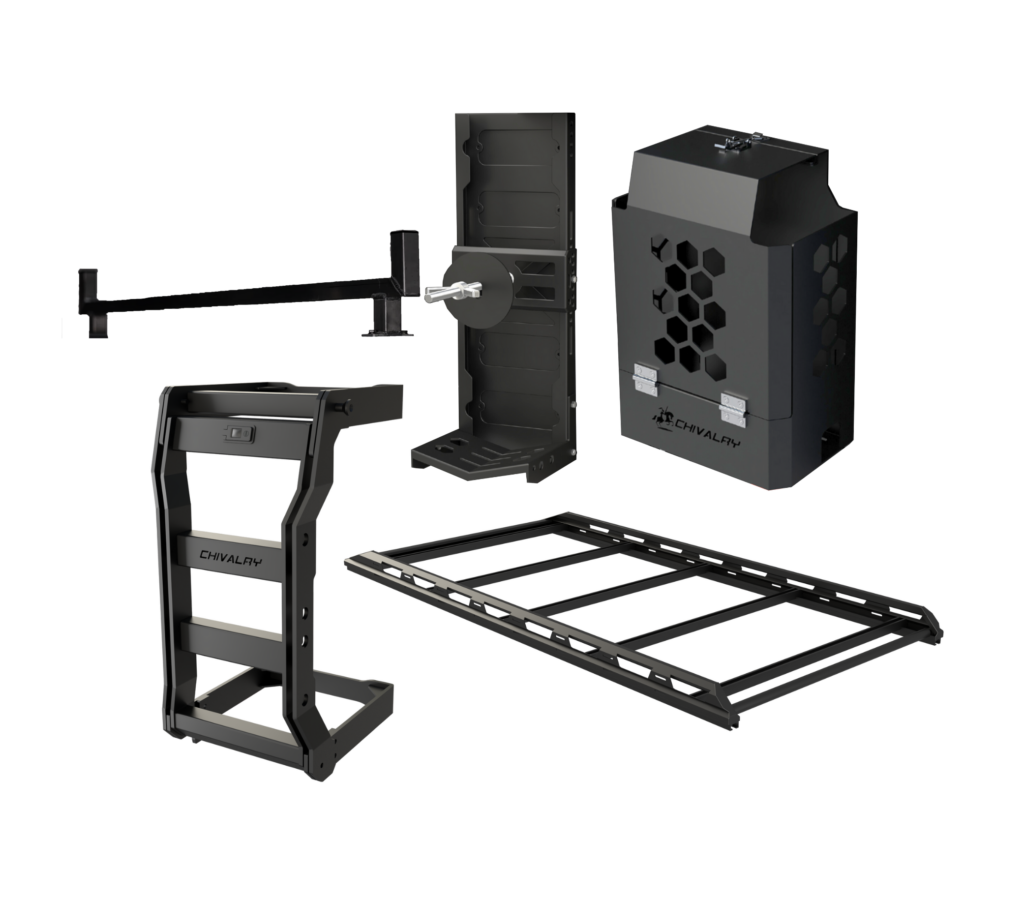
The best setup is one that matches your trade tasks, keeps tools easily accessible and improves your speed on site. If you are ready to plan a more efficient layout or want trays, toolboxes, canopy drawers or accessories for your ute, contact us today or explore L&G Chivalry’s full range of products online.