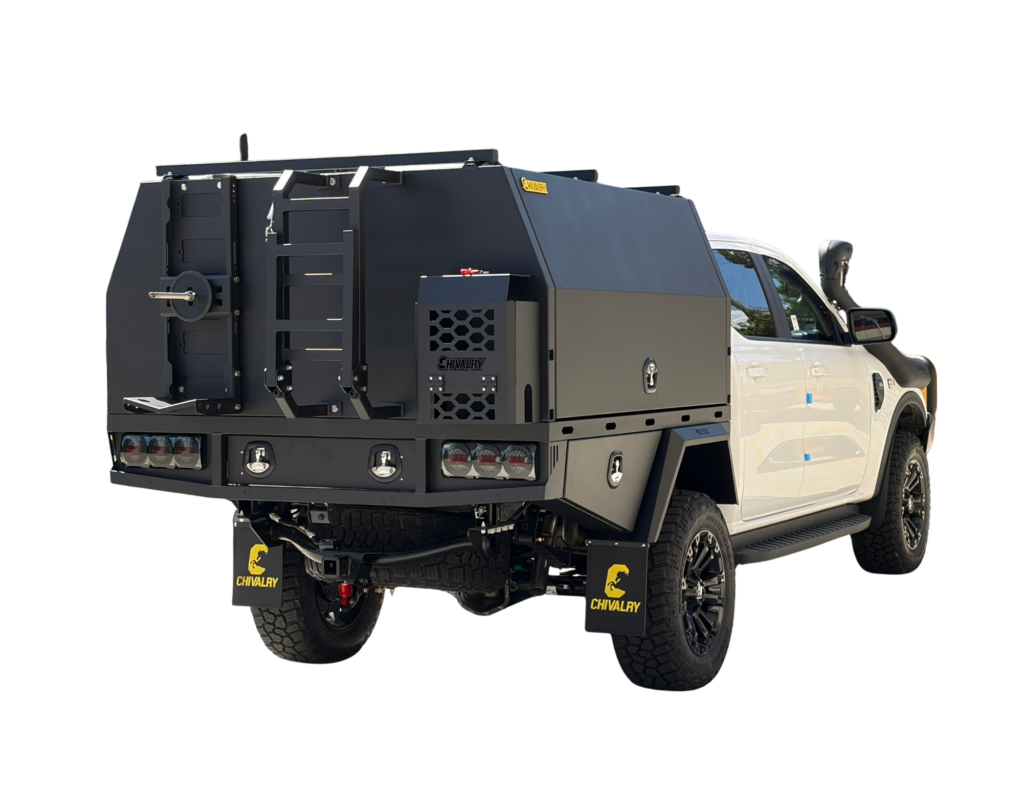
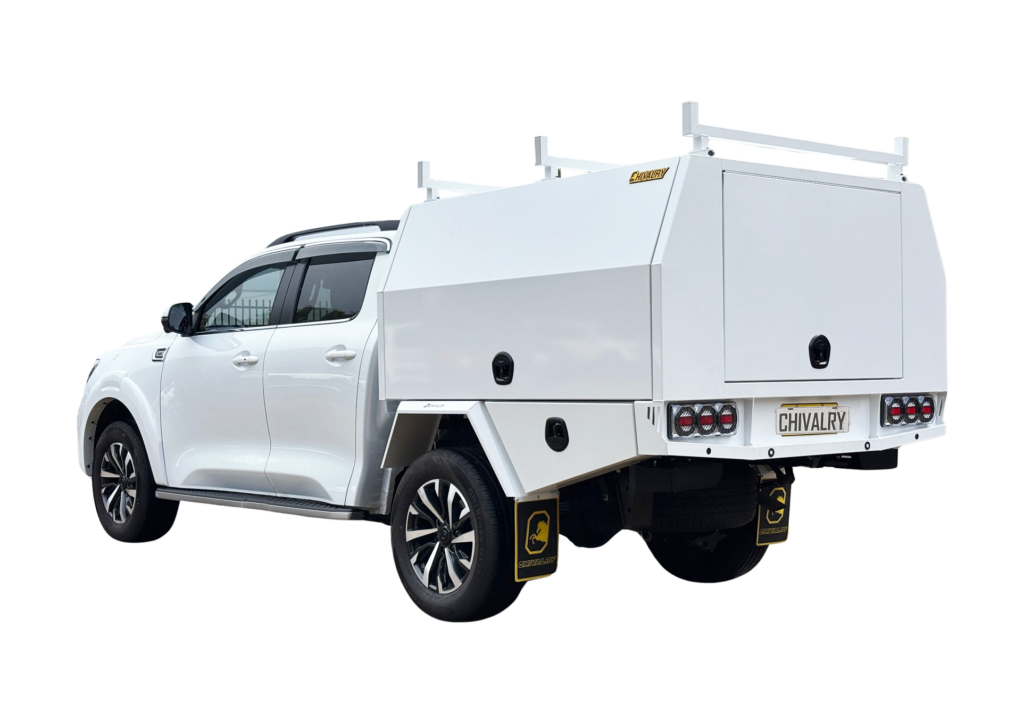
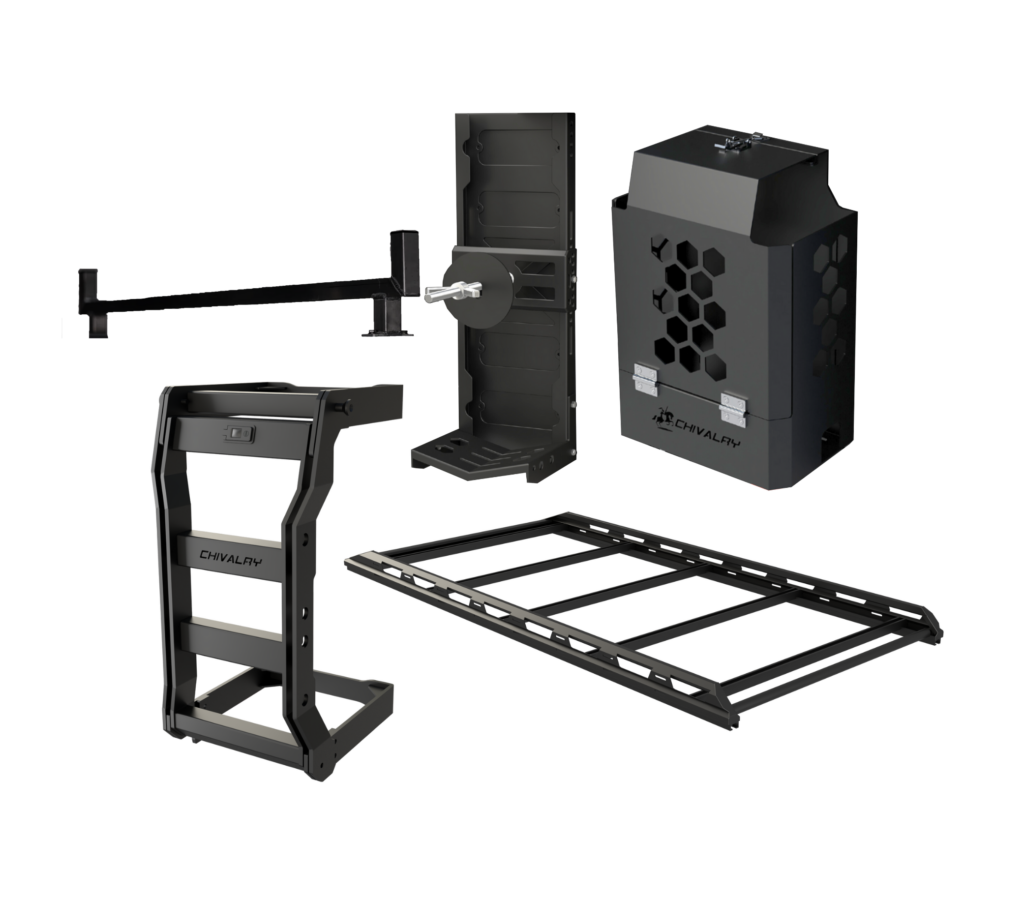
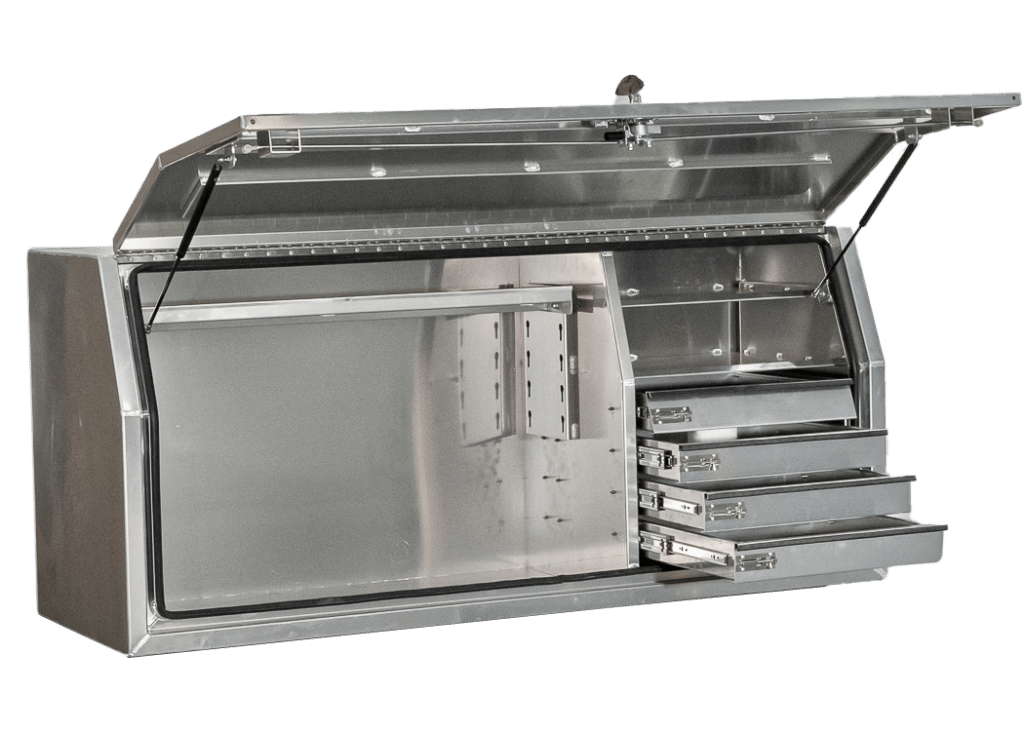
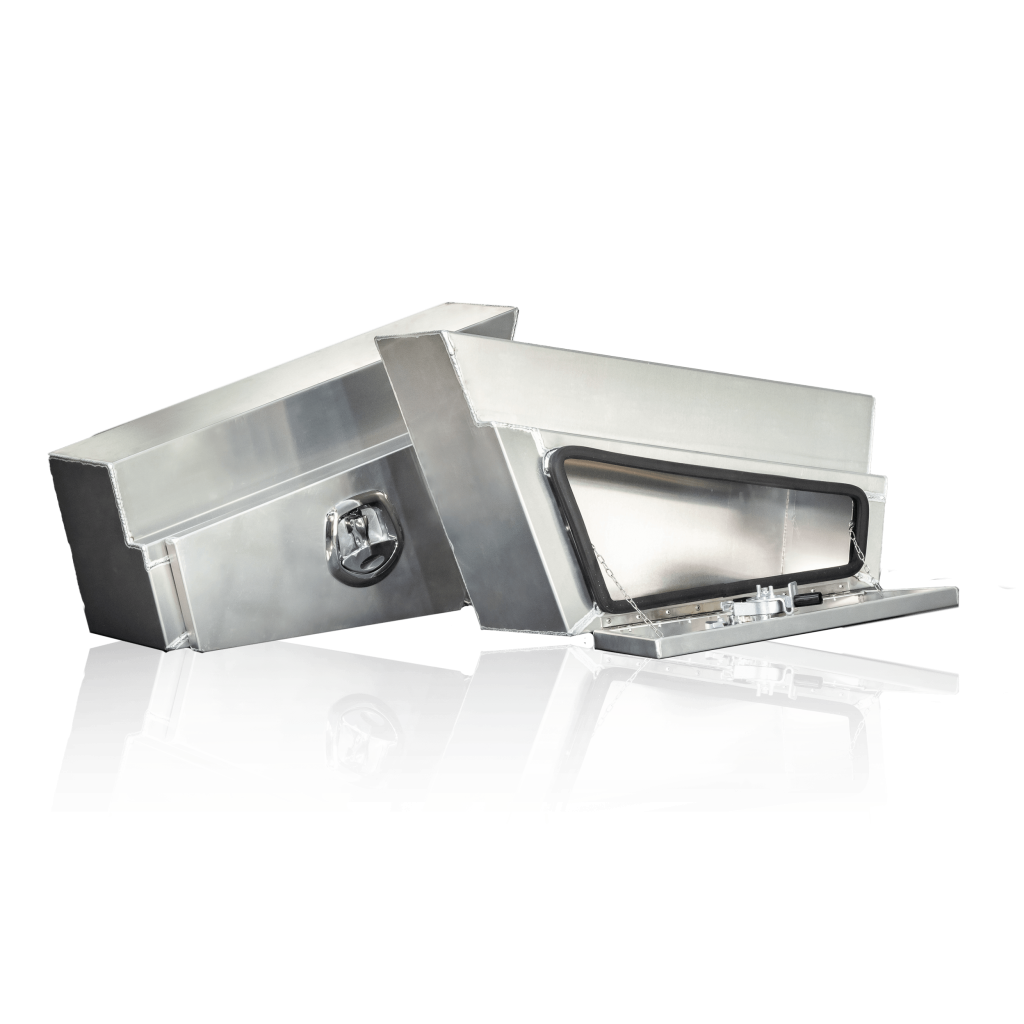
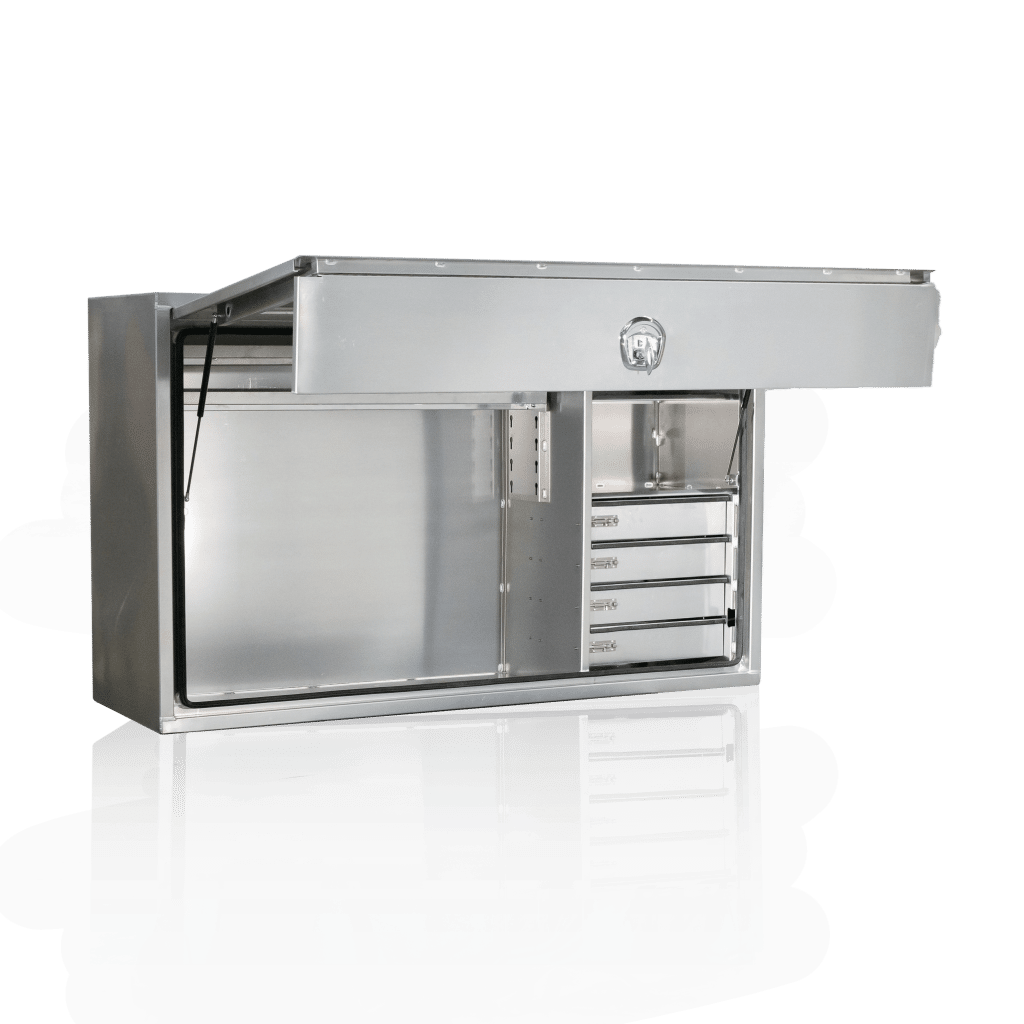
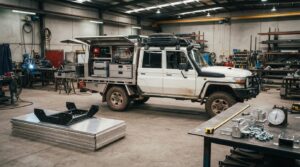
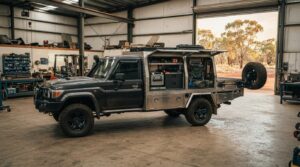
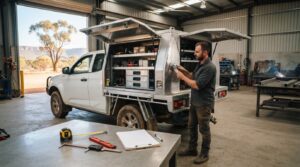
What if your ute’s storage was laid out around the jobs you do, rather than a generic fit-out? A custom ute service body can put tools and equipment where you need them, but every compartment, drawer and accessory takes up space and adds weight. The right layout needs to balance access and organisation with your vehicle’s carrying capacity.
If you’re tired of digging for gear or finding that a standard layout doesn’t suit your daily tasks, start by mapping out what you carry, how often you use it and where you need to reach it. Then consider how the body and its loaded fit-out will sit within the vehicle’s capacity.
This guide covers the decisions that shape a practical service body, from compartment layout and access to storage and payload trade-offs. You’ll also learn what details to prepare for a purpose-built design. Chivalry Trays and Canopies manufactures custom aluminium service bodies for trade and fleet requirements, with layouts and features tailored to the job.
Key Takeaways
- Start with the tools, equipment and tasks your setup needs to handle each workday.
- Choose compartments, drawers and shelves based on what you store and how you need to reach it.
- Compare a custom ute service body with a tray and canopy by considering your work pattern and access needs.
- Gather your vehicle details and intended load before settling on a layout, so storage plans account for payload as well as space.
- Set out clear layout priorities to help shape a purpose-built design around your operational needs.
Custom ute service bodies: start with the work they do
Design around the work, the gear and the vehicle’s capacity, not a catalogue of features. A custom ute service body should make daily equipment easier to organise, protect and reach while suiting the vehicle it’s built for. Tradespeople and fleets can benefit from a layout that gives tools a secure, predictable place.
Start with an inventory. List the tools you carry every day, specialist gear used occasionally, valuable items that need secure storage and bulky or delicate equipment that may need dedicated space. Include the vehicle’s make, model and relevant specifications in the brief. That gives the design a vehicle-specific starting point instead of assuming every ute has the same dimensions or limits. In Australia, “ute” commonly refers to a pickup truck, but the vehicle’s own specifications should guide the fit-out.
Turn a typical workday into a storage brief
Think through a normal day in order. Which tools do you reach for first? What stays in the body between jobs, and what only comes out for specialist tasks? This sequence helps distinguish quick-access gear from equipment that can be stored further away.
Note awkward items too. A bulky tool, fragile instrument or valuable piece of equipment may need its own space so it isn’t buried, knocked around or exposed while other gear is removed. For each item, record what it is, how often you use it and how you need to access it. That information is more useful than starting with a list of compartments.
Set priorities before choosing compartments
Rank what matters most: secure storage, fast access, clear organisation or making good use of available space. These priorities can compete. Enclosed storage can keep gear out of sight, for example, while a frequently used item may need to be reachable without shifting other equipment.
Consider where the ute is usually parked. If you work close to walls, other vehicles or site equipment, note which side needs clear access and whether doors or drawers could be obstructed. List the frustrations in your current setup too, such as tools getting mixed together, gear being hard to reach or valuable items lacking a secure home.
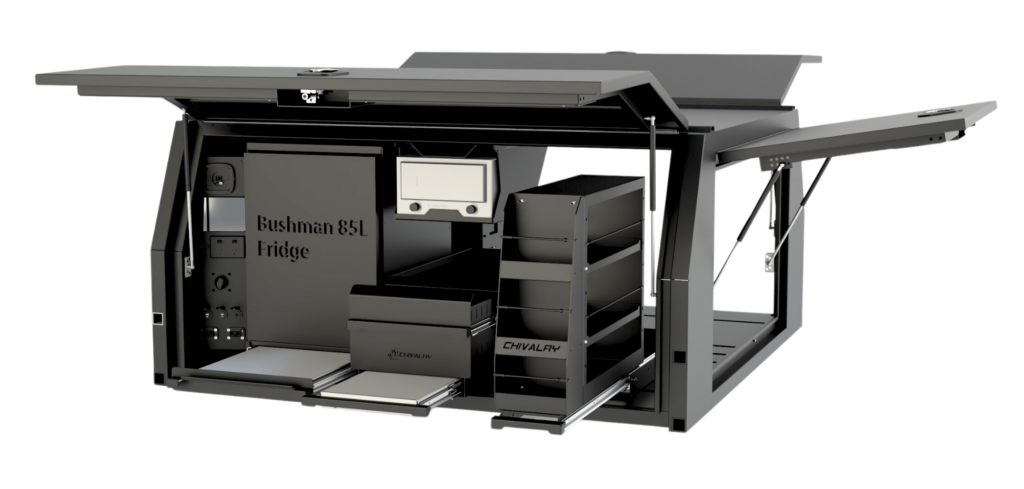
A custom service body is work-focused, purpose-built storage shaped around your gear, tasks and vehicle. Chivalry’s custom aluminium fabrication can tailor dimensions, layouts and features to operational needs, giving the design brief a clear starting point.
Custom service body options: configure compartments around your gear
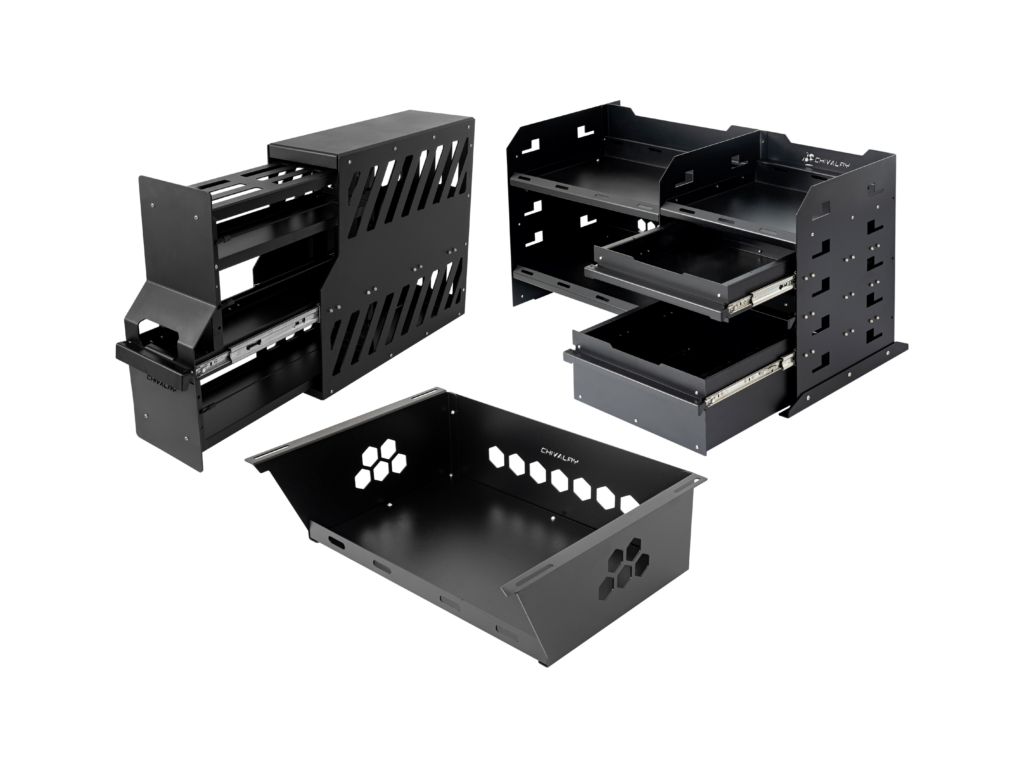
Choose each storage option for the equipment it needs to hold and how often you need to reach it. Enclosed compartments can keep gear contained and out of sight. Drawers can group smaller tools for easier sorting, while shelves make equipment visible and accessible. Dedicated spaces can separate bulky, delicate or valuable items from everyday gear.
Each option has trade-offs. Enclosed storage helps contain and organise equipment, but items may be harder to see at a glance. Open shelves improve visibility, but leave gear less contained. Drawers can make small tools easier to find, provided they suit the shape and weight of what goes inside. For broader context on matching service-body features to work needs, see Summit Truck Bodies.
Choose storage for tools you use every day
Keep frequently used tools in a spot that’s straightforward to reach, rather than burying them behind occasional-use gear. Group related equipment so you can collect what a task needs without searching or handling several other items. Separate anything that could scratch, damage or mark other tools and finishes. These choices help make a custom ute service body a usable work setup, not just extra storage.
| Storage choice |
Best suited gear |
Main design consideration |
| Enclosed compartments |
Valuable or infrequently used equipment |
Balance protection with how easily you can see and reach items. |
| Drawers |
Smaller tools and grouped equipment |
Match the space to the items, so gear stays organised and accessible. |
| Shelves |
Equipment you need to identify quickly |
Consider how exposed items may be to movement or contact. |
| Dedicated spaces |
Bulky, delicate or separate equipment |
Allow for the item’s shape and how it needs to be handled. |
Plan secure spaces for specialist equipment
Give valuable specialist gear a defined home instead of letting it compete for room with everyday tools. A drawer, shelf or separate compartment may suit, depending on the item’s shape, how often you use it and whether it needs to be kept separate. If securing equipment is a priority, include lockable storage in the design brief. The layout can then be shaped around the equipment and how it’s used, rather than assuming one arrangement suits every trade.
Use these comparisons to set layout priorities. Chivalry’s custom aluminium fabrication can tailor service body dimensions, compartments and features to operational needs. Explore custom ute service bodies as you refine your storage brief.
Custom ute service body or tray and canopy: choose by work pattern
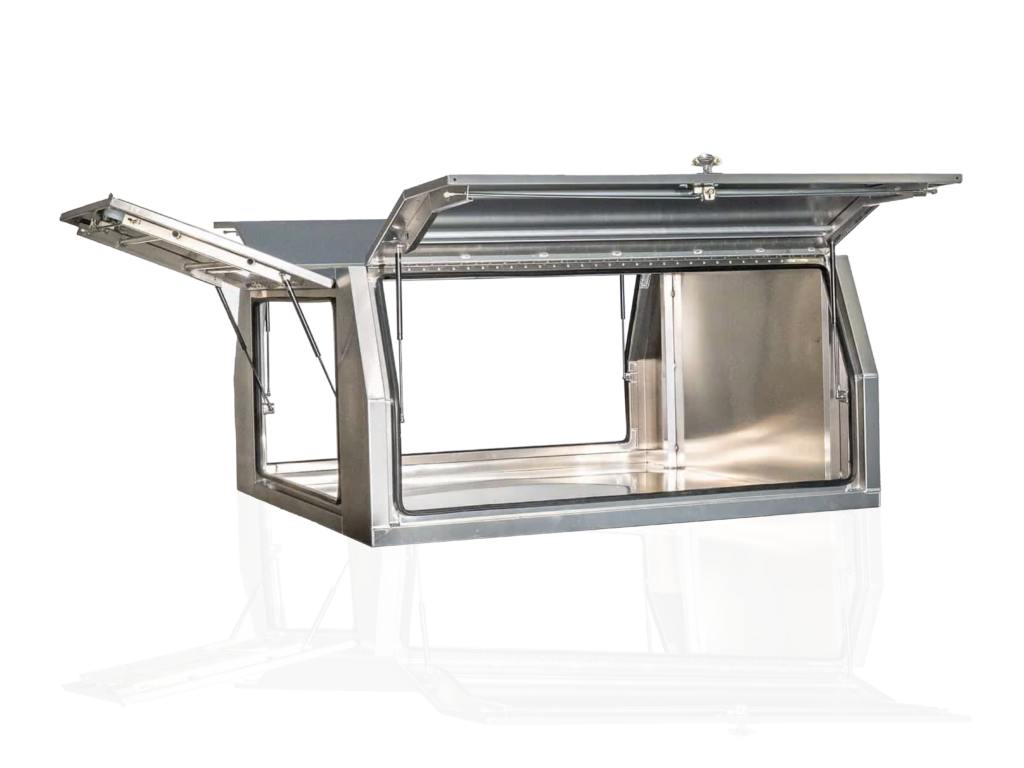
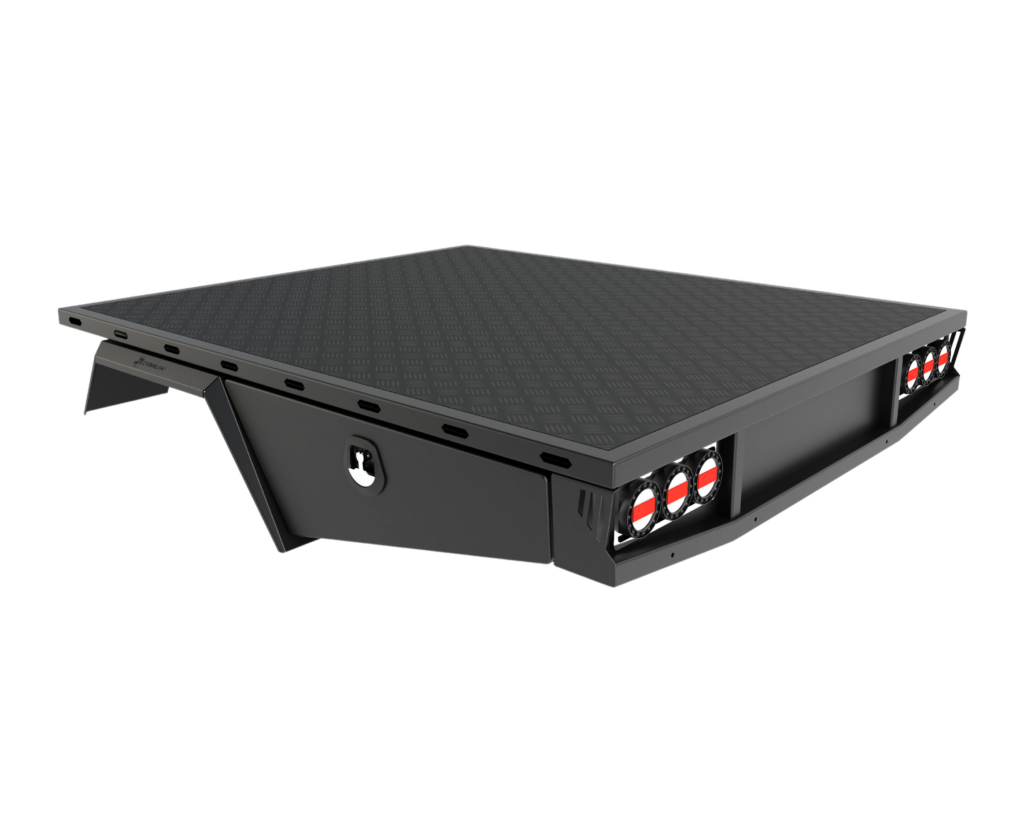
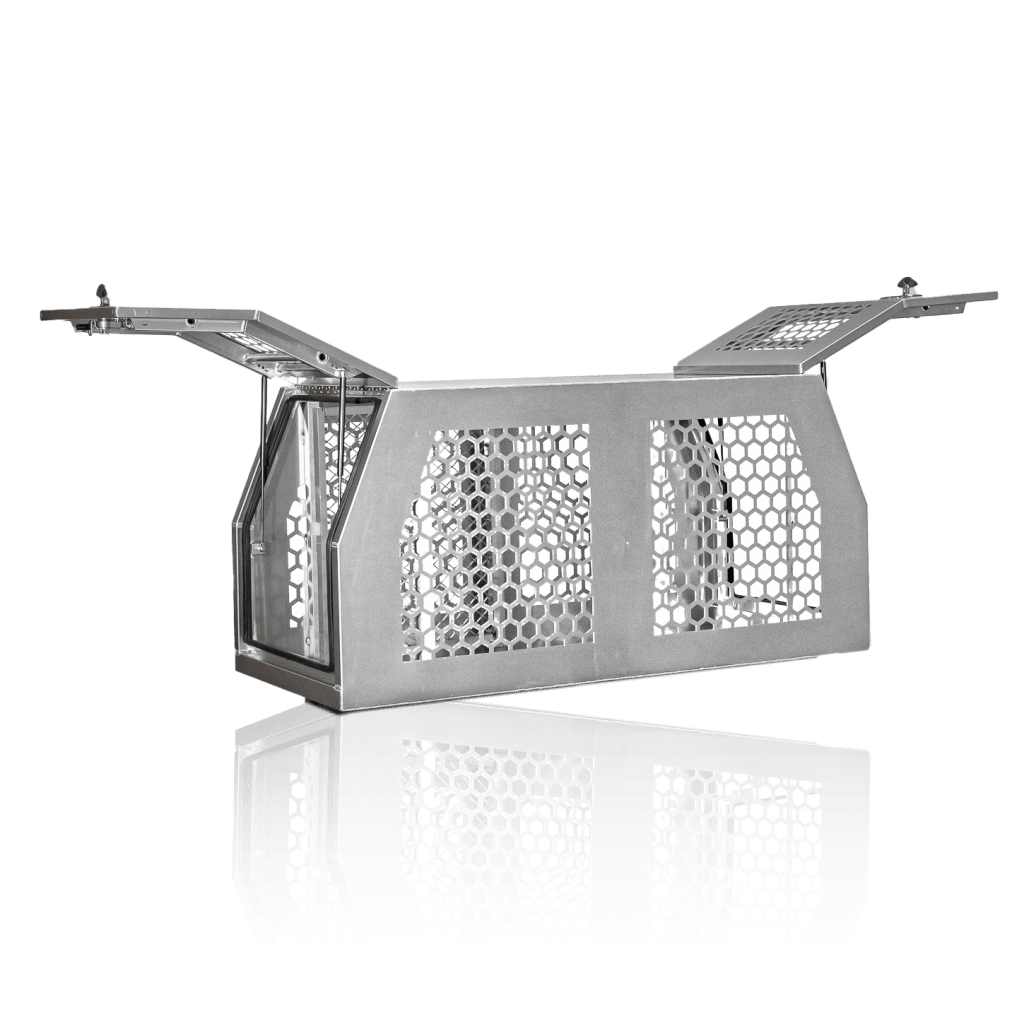
Neither setup suits every job. A custom ute service body brings organised compartments together in a purpose-built body, which can suit work that depends on keeping equipment sorted and secure. A practical ute canopy setup combines a tray with enclosed storage, offering a different way to carry and access gear. The right choice depends on your vehicle configuration, intended use and how you work through a typical day.
Compare the formats against practical questions, not appearance alone:
- Do you need separate, organised compartments for different tools or tasks?
- Which equipment must be reached quickly, and from which side of the vehicle?
- Do you regularly carry items that need open tray access as well as enclosed storage?
- How will the chosen setup and its load fit the vehicle’s specifications and intended use?
Your answers help show which format better supports your routine. They also keep the design focused on work requirements and vehicle fit, rather than features that don’t solve a daily problem.
When a custom service body may suit the job
A purpose-built service body may suit trades and fleets that rely on distinct, secure storage areas. Separate compartments can give recurring gear a consistent place, making it easier for workers to follow the same layout from one job to the next. Think about the tasks you repeat and the equipment each one calls for. A useful layout puts that gear where it supports the job, rather than adding features for appearance alone.
When to compare a tray and canopy setup
A tray-and-canopy combination may suit a different mix of carrying and access needs. Consider whether your work relies on the tray for particular items alongside enclosed storage for other equipment. Then compare how you load, retrieve and organise gear across a normal workday. Vehicle configuration and intended use still matter, so weigh the layout against the vehicle’s specifications before choosing a format.
If you’re weighing up that alternative, read the ute tray and canopy combo guide. Use it to compare the setup with your work pattern, then carry those priorities into a custom ute service body brief if organised compartments better match the job.
Check vehicle fitment, payload and access before finalising the design
A layout can look practical on paper and still miss the mark if it doesn’t suit the vehicle or how you use it. Before finalising a custom ute service body, gather the vehicle details, expected load and access requirements. A labelled sketch or gear list helps turn those details into a clear design brief.
Record vehicle details and intended loads
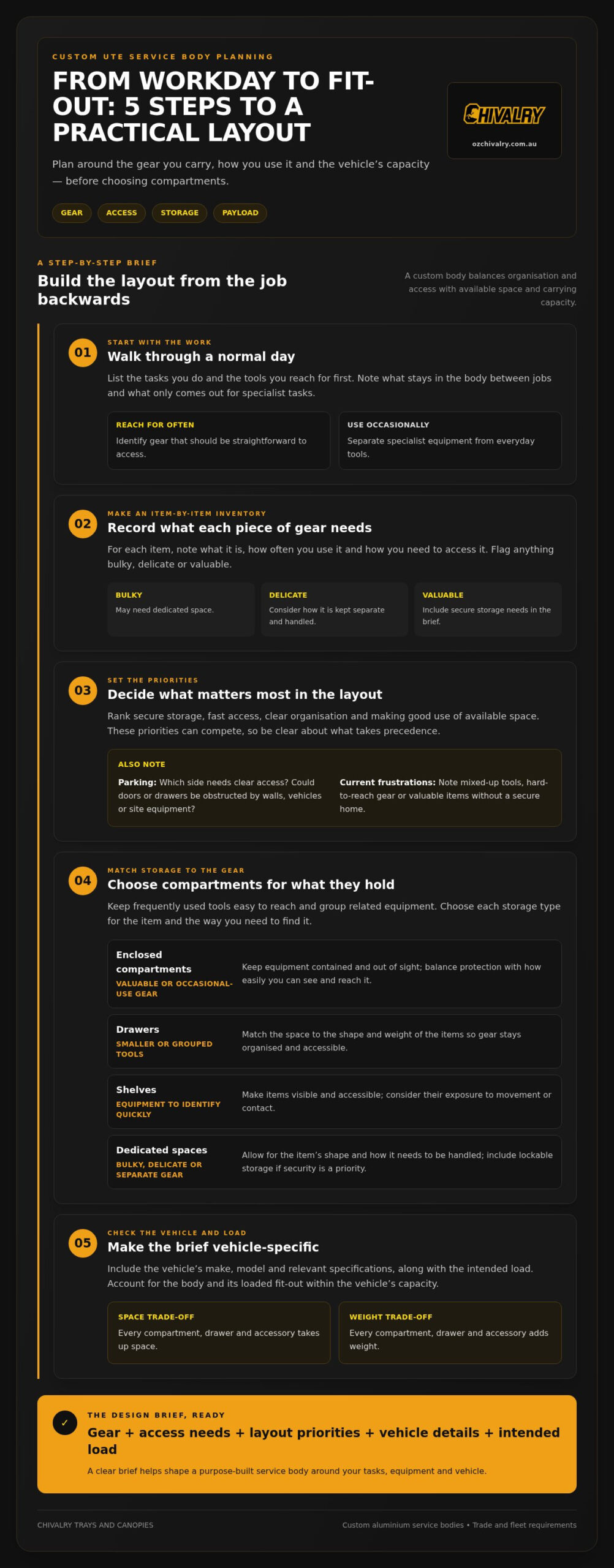
Work through this pre-design sequence:
- Identify the vehicle: Record its make, model, year and relevant configuration. Include any existing fit-out that will stay on the vehicle.
- List the load: Write down the tools, equipment and other items expected to travel in the ute. Note which are regular, occasional, bulky or particularly heavy.
- Map access: Record where you need to reach each item and how often you use it. Note any obstructions around the vehicle when it’s parked at work.
- Sketch the layout: Mark proposed storage areas and label them with the gear they need to hold. Keep the gear list beside the sketch so each space has a clear purpose.
Payload is the vehicle’s carrying allowance, not the amount of storage space available inside the body. For planning, account for the body, its fit-out, equipment and other loads carried in the vehicle. A roomy layout doesn’t automatically mean the vehicle can carry everything you want to put in it.
Don’t estimate a permitted load from a generic figure. Check the vehicle documentation for details that apply to its exact configuration, including any relevant load limits, and have technical or regulatory requirements verified before settling the design. Specifications and applicable requirements can vary, so don’t treat one ute’s figures as a guide for another.
Test the layout against real access conditions
Picture the ute in its usual work setting. Can you reach frequently used gear when parked beside a wall, another vehicle or site equipment? Will doors and compartments open without blocking a walkway or making you shift other items first? Check that access remains practical in the places you regularly work.
Finally, compare the proposed arrangement with your workday inventory. Make sure each item has a sensible place and that the layout supports the order in which you use the gear. A sketch annotated with access points, equipment and vehicle details gives Chivalry a practical starting point for tailoring body dimensions and layout to your needs.
Ready to shape your brief? Plan your custom ute service body around your vehicle, load and access needs.
Plan a custom ute service body with Chivalry
A strong brief turns workday needs into clear layout priorities. Start with the vehicle and the jobs it handles, then list the equipment it carries and how you need to reach it. From there, rank the requirements that matter most. This gives the design a practical basis and keeps the conversation centred on function.
Prepare a clear custom build brief
Bring together the key details before settling on features:
- Vehicle: Note the make, model, year and relevant configuration.
- Main duties: Describe the work the ute supports and the tasks it handles regularly.
- Equipment: List daily tools, occasional-use gear and valuable or awkward items that need a defined place.
- Priorities: Rank storage, security and access. Be clear about which needs matter most when trade-offs arise.
- Layout reference: Add a simple sketch or annotated photographs if they make compartment positions and access points easier to explain.
Give each priority a reason. “Quick access” is more useful when you identify the tools you need to reach often. “Secure storage” is clearer when you name the equipment that needs an enclosed space. That context helps shape a custom ute service body around how the vehicle is used, rather than a feature list without a work purpose.
Move from requirements to a work-ready layout
Chivalry’s custom aluminium fabrication can tailor dimensions, layouts and features to operational needs. For a trade vehicle, that may mean planning distinct places for everyday tools and specialist equipment. For a fleet, the brief can focus on a consistent way to organise gear around the work each vehicle supports. The layout should reflect the actual equipment and access needs, rather than assuming every trade or vehicle needs the same setup.
Connect each requirement to a design decision. Which gear needs an enclosed space? What must be reached quickly? Which items need to stay separate? Keep vehicle details and load considerations in the brief so the proposed body is planned for its intended use.
With the vehicle, gear list and priorities in hand, you’re ready to turn the brief into a purpose-built storage plan. Plan your custom ute service body with Chivalry.
Build a setup around the work ahead
A work-ready service body starts with your daily tasks and the gear you carry. Set compartment priorities around access, organisation and secure storage, then compare a service body with a tray and canopy against your work pattern. Keep the vehicle’s specifications and intended load in view as you plan the fit-out.
A clear brief gives the design direction. Record your vehicle details, list your equipment and show how you need to reach it. Chivalry’s custom aluminium fabrication can tailor dimensions, layouts and features to trade and fleet requirements, helping shape a custom ute service body around the way you work.
Ready to turn your priorities into a practical design? Plan your custom ute service body with Chivalry and take the next step towards a setup that works alongside you.
Frequently Asked Questions
What is a custom ute service body?
A custom ute service body is a purpose-built aluminium storage body designed around a vehicle’s work requirements. It can include organised, secure compartments that give tools and equipment defined places, with dimensions, layout and features tailored to operational needs. Rather than starting with a generic fit-out, its design starts with the gear carried and the tasks performed, then considers how workers need to access equipment during the day.
How do I plan a custom ute service body?
Plan a custom ute service body by listing your daily tasks, the tools and equipment you carry, and how often you use each item. Separate frequently accessed gear from occasional-use or valuable equipment, then rank priorities such as organisation, secure storage and access. Record your vehicle details and intended load too. A labelled sketch or annotated photos can help explain compartment positions and access needs clearly.
Is an aluminium ute service body suitable for tradies?
An aluminium ute service body can suit tradies who need organised storage tailored to their work. Chivalry designs and manufactures custom aluminium service bodies for tradespeople, with compartments shaped around operational needs. Suitability depends on your tools, work routine, vehicle configuration and intended load. Match the layout to real tasks, and consider the body and equipment as part of the vehicle’s overall load.
What should I store in a ute service body?
Store the tools and equipment required for your work, with frequently used items arranged for straightforward access. Group related gear together, and give bulky, delicate or valuable equipment a suitable dedicated space. You might separate everyday tools from specialist items used less often. Choose storage based on each item’s shape, use and access needs, rather than filling compartments with gear that rarely supports your work.
Will a custom service body affect my ute’s payload?
Yes. The service body and its fit-out add weight, leaving less of the vehicle’s carrying allowance available for tools, equipment and other loads. Payload is about how much the vehicle can carry, not how much storage space the body provides. The effect depends on the specific vehicle and setup, so use vehicle-specific information and account for the body and everything carried when planning the fit-out.
What details do I need before ordering a custom ute service body?
Prepare the ute’s make, model, year and relevant configuration, along with a list of the equipment it needs to carry. Note how often you use each item, its storage needs and how you need to access it. Include the vehicle’s intended duties and any existing fit-out that will remain. A simple sketch or annotated photos can show preferred compartment positions. Use vehicle-specific information when considering load limits rather than estimating permitted loads.
Can a custom ute service body be designed for a fleet?
Yes. Chivalry designs custom ute service bodies for fleet operational needs as well as individual trade requirements. Start by identifying the work each vehicle supports, the equipment crews carry and the access patterns that matter on the job. A clear fleet brief can set out shared priorities and differences between vehicle roles. Custom aluminium fabrication can then tailor dimensions, layouts and features to those requirements.